
Alankar show room

Author name: Demo

Blog

CANVA VS PHOTOSHOP

Canva vs Adobe Photoshop: Which Design Tool is Better for Digital Marketers in 2026? INTRODUCTION With the rapid growth of digital marketing, professionals need to create engaging visuals quickly. Canva has become a favorite for speed and simplicity, while Photoshop remains the industry standard for advanced editing. This topic appeals to marketers, students, entrepreneurs, and Search Intent People searching this topic want to know: Target Audience Primary SEO Keywords Secondary Keywords Suggested Blog Structure Introduction What is Canva? What is Adobe Photoshop? Detailed Comparison Compare both tools based on: Comparison Table A side-by-side table covering all major features. Which Tool Should You Choose? Recommend Canva for beginners and marketers, Photoshop for professionals and advanced creatives. Conclusion Summarize when each tool is the better choice. 2. Canva vs Photoshop: Which Tool Creates Better Social Media Content? Why This Topic Is Trending Businesses are investing heavily in Instagram, Facebook, LinkedIn, Pinterest, and YouTube. This blog focuses on which tool produces better social media content and faster workflows. Why Readers Click People want to know: Suggested Sections Introduction Why Visual Content Matters Canva for Social Media Photoshop for Social Media Platform-wise Comparison: Time Comparison Design Quality Scheduling & Integrations AI Features Winner Conclusion 3. Canva vs Photoshop: The Ultimate Guide for Beginners, Freelancers & Digital Marketers Why It’s Trending Beginners often struggle to choose between Canva and Photoshop. This blog helps them decide based on their goals. Search Intent Readers want to know: Suggested Structure Introduction Who Should Use Canva? Who Should Use Photoshop? Comparison by User Type: Pricing Comparison Learning Resources Career Opportunities Which One Should You Learn First? Conclusion 4. Canva vs Photoshop: How AI is Revolutionizing Graphic Design in 2026 Why It’s Trending AI-powered design is transforming workflows. Canva Magic Studio and Adobe Firefly have introduced intelligent editing features, making this topic highly relevant. Include Topics Like Suggested Structure Introduction Rise of AI in Design Canva AI Features Photoshop AI Features Comparison of AI Capabilities Speed vs Precision Real-World Marketing Examples Future of AI Design Conclusion 5. Canva vs Photoshop: 15 Key Differences Every Digital Marketer Should Know Why It’s Trending List-style articles are easy to read and often perform well in search results because they provide quick, scannable answers. Suggested Comparison Points Canva Adobe Photoshop Beginner-friendly Professional-level editing Drag-and-drop editor Layer-based editing Thousands of templates Complete creative freedom Browser-based Desktop-first application Quick social media designs Advanced photo manipulation Easy collaboration Limited collaboration tools Brand Kit Professional asset management Magic Resize Manual resizing Budget-friendly Higher subscription cost AI-powered templates Advanced AI editing One-click exports Professional export settings Fast workflow Detailed workflow Minimal learning curve Steeper learning curve Great for marketers Great for designers Excellent for everyday content Excellent for high-end creative projects Suggested Sections SEO Strategy for Your Blog Suggested H1 Title Canva vs Adobe Photoshop: Which Design Tool is Better for Digital Marketing in 2026? Alternative Click-Worthy Titles Meta Description Compare Canva and Adobe Photoshop in 2026. Explore features, pricing, ease of use, AI tools, and discover which design software is best for digital marketers, content creators, and professionals. Primary Keywords Secondary Keywords Suggested Headings Best Recommendation For a digital marketing assignment, the strongest and most engaging topic is: CONCLUSION This topic is highly searchable, aligns with current digital
Blog

Google Ads vs Meta Ads: Which Advertising Platform is Best for Your Business in 2026?

GOOGLE Ads vs Meta Ads: Which Platform Delivers Better Results? In today’s digital-first world, businesses cannot rely solely on traditional marketing to attract customers. Paid advertising has become one of the most effective ways to increase brand awareness, generate qualified leads, drive website traffic, and boost sales. Among all digital advertising platforms,GOOGLE ADS VS META stand out as the two most powerful options. If you’re wondering Google Ads vs Meta Ads, you’re not alone. Many businesses struggle to decide where to invest their advertising budget. While both platforms are incredibly effective, they serve different purposes and deliver different results depending on your business goals. This comprehensive guide explains the differences between Google Ads and Meta Ads, their advantages, disadvantages, costs, targeting capabilities, and how to choose the right platform for your business. What Are Google Ads? Google Ads is Google’s online advertising platform that allows businesses to display advertisements across: Google Ads primarily works on a Pay-Per-Click (PPC) model, meaning advertisers pay only when someone clicks on their advertisement. The biggest advantage of Google Ads is that it targets users who are actively searching for products or services. For example: Someone searches: “Best Digital Marketing Course in Bangalore” Your Google Search Ad appears at the top of search results. This means users already have buying intent. What Are Meta Ads? Meta Ads are advertisements displayed across Meta’s platforms, including: Unlike Google Ads, Meta Ads focus on interest-based targeting rather than search intent. Users aren’t actively searching for your product. Instead, Meta shows advertisements based on: For example: A person interested in fashion may suddenly see an advertisement for a clothing brand while scrolling Instagram. Google Ads vs Meta Ads: The Biggest Difference [GOOGLE ADS VS META ] The primary difference is simple. Google Ads Customers are already searching. Example: “I need running shoes.” Google immediately shows advertisements. This is called Intent Marketing. Meta Ads Customers are not searching. You create demand by showing attractive advertisements. This is called Discovery Marketing. Google Ads Types Google offers multiple advertising formats. Search Ads Appear at the top of Google Search results. Best for: Display Ads Visual banner advertisements shown across millions of websites. Best for: Shopping Ads Ideal for ecommerce stores. Products appear with: Video Ads Run on YouTube. Perfect for: App Promotion Ads Designed specifically for mobile app downloads. Meta Ads Types Meta also offers several advertising formats. Image Ads Simple yet highly effective. Ideal for: Video Ads Generate higher engagement than static images. Perfect for: Carousel Ads Show multiple products in one advertisement. Great for ecommerce. Stories Ads Displayed between Instagram and Facebook Stories. Highly engaging. Reels Ads One of the fastest-growing ad formats. Perfect for: Collection Ads Allow users to browse multiple products without leaving Facebook or Instagram. Google Ads Targeting Google targets users based on: This makes Google Ads highly effective for users ready to take action. Meta Ads Targeting Meta offers advanced audience targeting based on: This makes Meta ideal for discovering new customers. Google Ads vs Meta Ads: Cost Comparison Advertising costs depend on competition, industry, and audience. Generally: Google Ads Higher Cost Per Click (CPC) However, Users have stronger purchase intent, often resulting in higher conversion rates. Meta Ads Usually lower CPC. Great for: Advantages of Google Ads VS Meta Ads High Purchase Intent People are already searching for your product. Faster Conversions Ideal for businesses wanting immediate inquiries or sales. Massive Reach Google processes billions of searches every day. Advanced Analytics Detailed reports help optimize campaigns. Excellent ROI When campaigns are optimized correctly, Google Ads often generate strong returns. Advantages of Meta Ads Highly Visual Perfect for showcasing products. Detailed Audience Targeting Target customers based on interests and behavior. Lower Advertising Costs Ideal for small businesses with limited budgets. Excellent Brand Awareness Great for introducing your brand to new audiences. Social Engagement Encourages likes, comments, shares, and direct messages. Disadvantages of Google Ads Disadvantages of Meta Ads Google Ads vs Meta Ads: Which Businesses Should Choose Which? Choose Google Ads If You Want Examples: Choose Meta Ads If You Want Examples: Can You Use Google Ads and Meta Ads Together? Absolutely. In fact, many successful businesses combine both platforms to create a complete marketing funnel. For example: This integrated strategy often improves reach, lead quality, and return on investment (ROI). Best Practices for Successful Paid Advertising [GOOGLE ADS VS META ] To maximize results from Google Ads or Meta Ads: Final Verdict: Google Ads vs Meta Ads There is no universal winner because the right platform depends on your objectives. If your goal is to capture customers actively searching for your products or services, Google Ads is often the better choice. If your focus is on building brand awareness, engaging potential customers, and showcasing visually appealing products, Meta Ads excels. For many businesses, the most effective strategy is to use Google Ads and Meta Ads together. Google captures high-intent demand, while Meta creates demand and nurtures customer relationships. By combining both, businesses can build a stronger digital presence, generate more qualified leads, and achieve sustainable growth. Frequently Asked Questions (FAQs) 1. Which is better for beginners: Google Ads or Meta Ads? Meta Ads are often easier for beginners because they offer intuitive audience targeting and generally lower advertising costs. Google Ads, however, can deliver faster results if users are actively searching for your offerings. 2. Which platform gives a higher ROI? ROI depends on your business, audience, and campaign optimization. Google Ads usually perform well for high-intent searches, while Meta Ads excel in brand awareness and customer engagement. 3. Can small businesses afford paid advertising? Yes. Both Google Ads and Meta Ads allow flexible budgets, making them suitable for startups and small businesses. Starting with a small daily budget and optimizing campaigns over time is a common approach. 4. Which platform is better for eCommerce? Both platforms are effective. Google Shopping Ads help capture purchase-ready customers, while Meta Ads are excellent for product discovery, retargeting, and visually promoting products. 5. Should I run Google

Blog

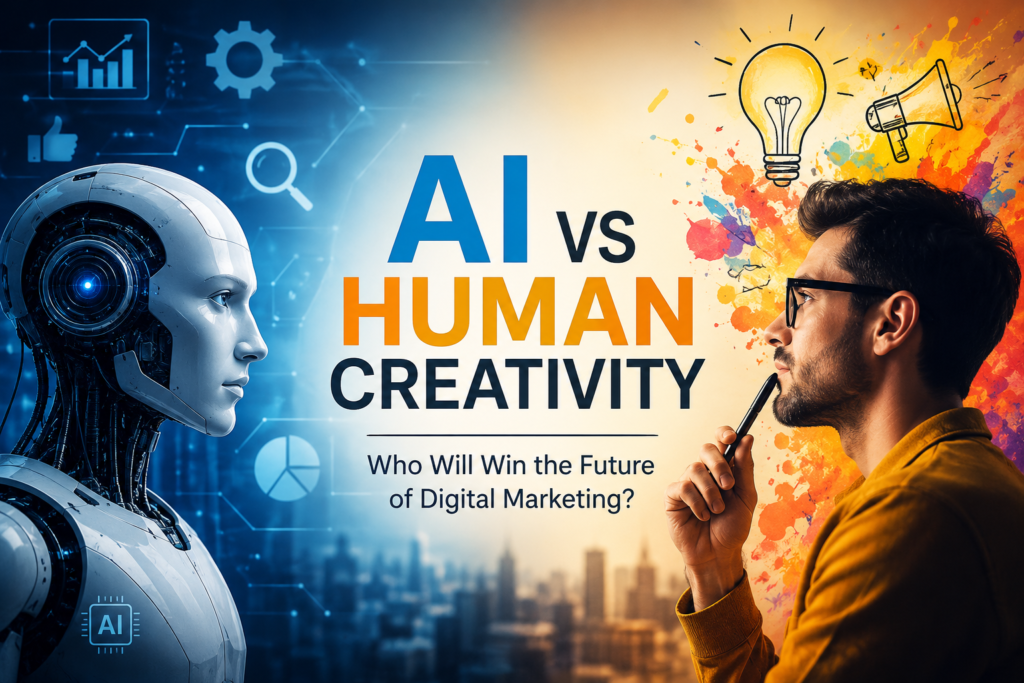
AI vs Human Creativity: Who Will Win the Future of Digital Marketing?

AI vs Human Creativity: Who Will Win the Future of Digital Marketing? Artificial Intelligence (AI) has transformed the way businesses approach digital marketing. From writing blog posts and creating social media captions to generating images and analyzing customer data, AI-powered tools are becoming an essential part of every marketer’s toolkit. This rapid growth has sparked an important question: Will AI replace human creativity in digital marketing? The answer isn’t as simple as choosing one over the other. While AI offers incredible speed, efficiency, and data-driven insights, human creativity brings emotion, originality, and authentic storytelling. The future of digital marketing isn’t about AI versus humans—it’s about how both can work together to create better marketing experiences. Let’s explore why. What Is AI in Digital Marketing? AI in digital marketing refers to the use of intelligent software and machine learning technologies to automate, analyze, and optimize marketing activities. Today, AI can: These capabilities save businesses time and improve productivity, allowing marketers to focus on strategy rather than repetitive tasks. Why AI Is Transforming Digital Marketing AI has become popular because it can process large amounts of information in seconds—something humans simply cannot do at the same speed. Some of the biggest advantages of AI include: Speed and Efficiency Tasks that once took hours—such as keyword research, content outlines, or campaign analysis—can now be completed in minutes. Data-Driven Decisions AI analyzes customer behavior, website traffic, and campaign performance to help marketers make smarter decisions backed by real data. Personalization at Scale Consumers expect personalized experiences. AI helps businesses recommend products, customize emails, and deliver relevant content based on user preferences. Improved Productivity By automating repetitive tasks, AI allows marketers to spend more time on creative strategy, relationship building, and campaign planning. These benefits make AI a valuable partner for marketers—but they don’t tell the whole story. Why Human Creativity Still Matters Marketing isn’t only about reaching people; it’s about connecting with them. Human creativity brings qualities that AI cannot genuinely experience or replicate. Emotional Storytelling People remember stories that make them laugh, inspire them, or make them feel understood. Human creators draw from real-life experiences, emotions, and cultural understanding to create memorable campaigns. Original Ideas AI generates content based on patterns in existing data. Humans can challenge assumptions, think differently, and develop fresh concepts that stand out in crowded markets. Building Trust Consumers connect with authentic voices. Honest opinions, personal experiences, and transparent communication help build lasting relationships between brands and audiences. Understanding Culture Trends, humor, and social conversations change quickly. Human marketers understand context, emotions, and cultural nuances that AI may misinterpret. These qualities are essential for building strong brands that people remember and trust. AI vs Human Creativity: A Comparison AI Human Creativity Works quickly Thinks creatively Processes large amounts of data Understands emotions Automates repetitive tasks Builds authentic connections Identifies patterns Creates original ideas Improves efficiency Inspires trust and loyalty Instead of replacing each other, AI and humans bring different strengths to the marketing process. Can AI Replace Digital Marketers? This is one of the most searched questions today. The short answer is no. AI can assist marketers, but it cannot fully replace the strategic thinking, creativity, empathy, and decision-making that humans bring. For example, AI can write a product description, but it cannot truly understand a brand’s mission or the emotional impact a campaign should create. It can suggest headlines, but choosing the one that best reflects a brand’s voice still requires human judgment. Digital marketing involves understanding people—not just data. The Best Marketing Strategy: Human + AI The most successful marketers aren’t choosing between AI and creativity. They’re combining both. Here’s how this partnership works: This approach saves time while ensuring content remains authentic, engaging, and valuable. Skills Every Digital Marketer Should Develop As AI becomes more common, marketers should focus on skills that technology cannot easily replace. These include: The marketers who thrive in the future will know how to use AI effectively without relying on it completely. Common Mistakes to Avoid Many businesses make the mistake of publishing AI-generated content without reviewing or improving it. Avoid these common pitfalls: AI should support creativity—not replace it. The Future of Digital Marketing The future belongs to marketers who combine technology with creativity. AI will continue to automate repetitive work, improve personalization, and provide valuable insights. At the same time, human creativity will remain the driving force behind storytelling, innovation, and meaningful customer relationships. Businesses that successfully blend AI efficiency with human imagination will be better equipped to stand out in an increasingly competitive digital landscape. Conclusion So, who will win the future of digital marketing: AI or human creativity? The real winner is the combination of both. AI can make marketers faster, more efficient, and more data-driven. Human creativity brings empathy, originality, and purpose—qualities that technology alone cannot provide. Rather than fearing AI, digital marketers should learn to embrace it as a powerful tool while continuing to develop the creative skills that make marketing truly memorable. In the years ahead, success won’t belong to those who rely only on AI or only on human effort. It will belong to those who know how to combine the strengths of both to create meaningful, authentic, and impactful marketing. Frequently Asked Questions Will AI replace content writers? AI can assist with research, drafting, and editing, but skilled writers who provide original insights, storytelling, and strategic thinking will continue to be in demand. Is AI good for SEO? Yes. AI can support keyword research, content planning, and optimization. However, high-quality, helpful, and human-reviewed content remains essential for long-term SEO success. Should beginners learn AI for digital marketing? Absolutely. Learning how to use AI tools effectively is becoming an important skill. The key is to use AI to improve your work, not replace your creativity. What is the future of AI in digital marketing? AI will continue to automate routine tasks, improve personalization, and enhance decision-making, while human marketers will focus on creativity, strategy, and relationship building.

Scroll to Top